

Asterix
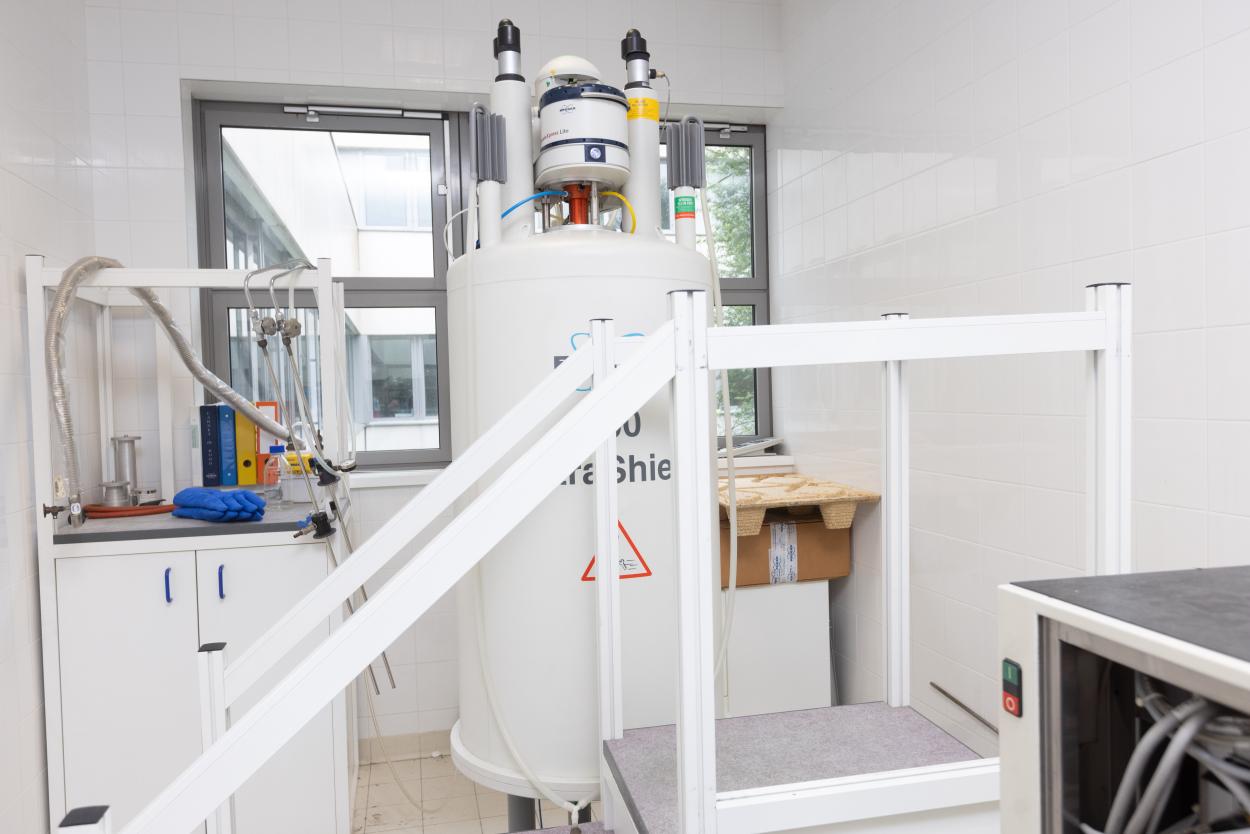
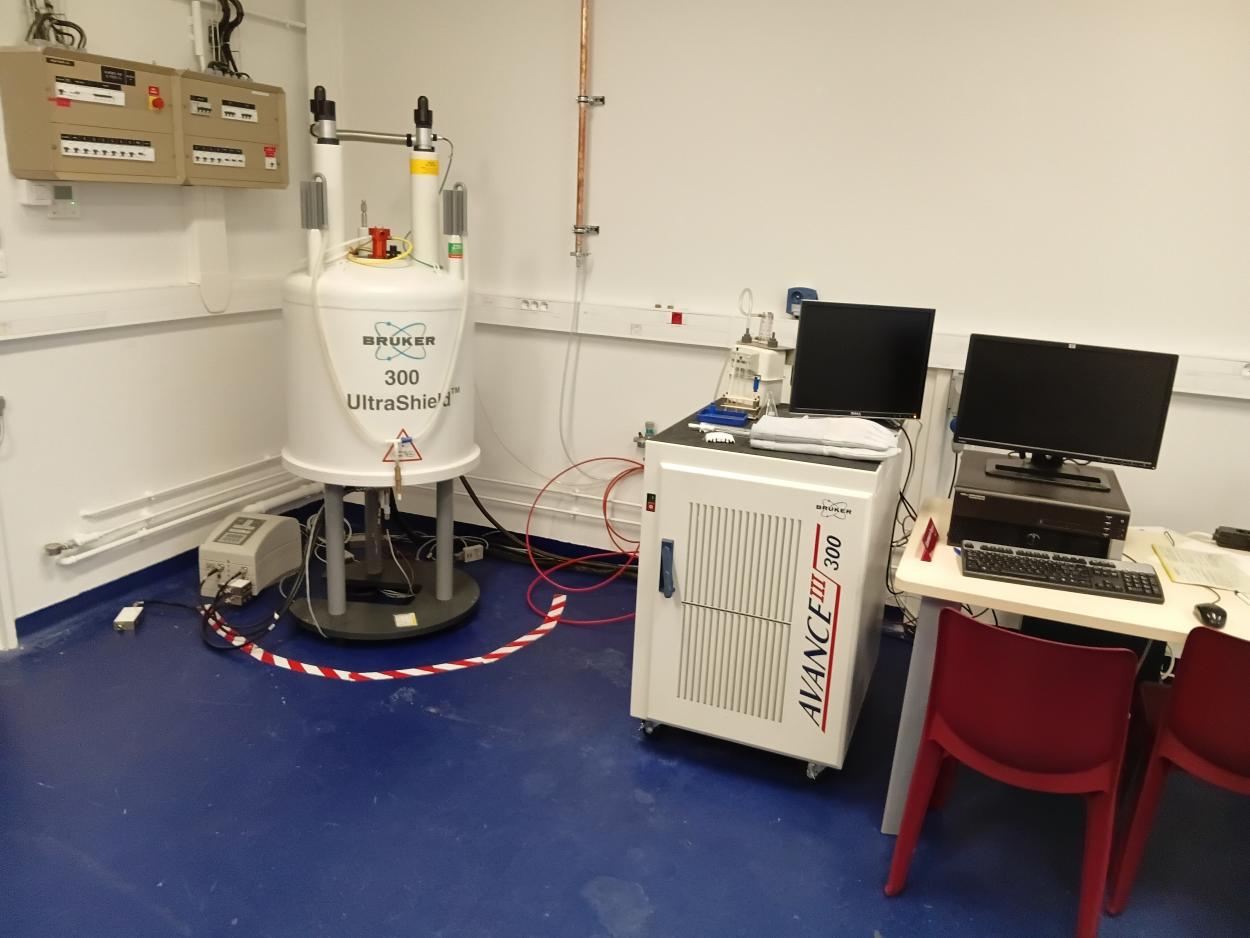
Asterix is the routine spectrometer of ResoMag facility. With a 24 sample-changer, an AvanceNeo 400 console, it is dedicated to the study of proton, Fluorine-19, Phosphorous-31 and Carbon-13.
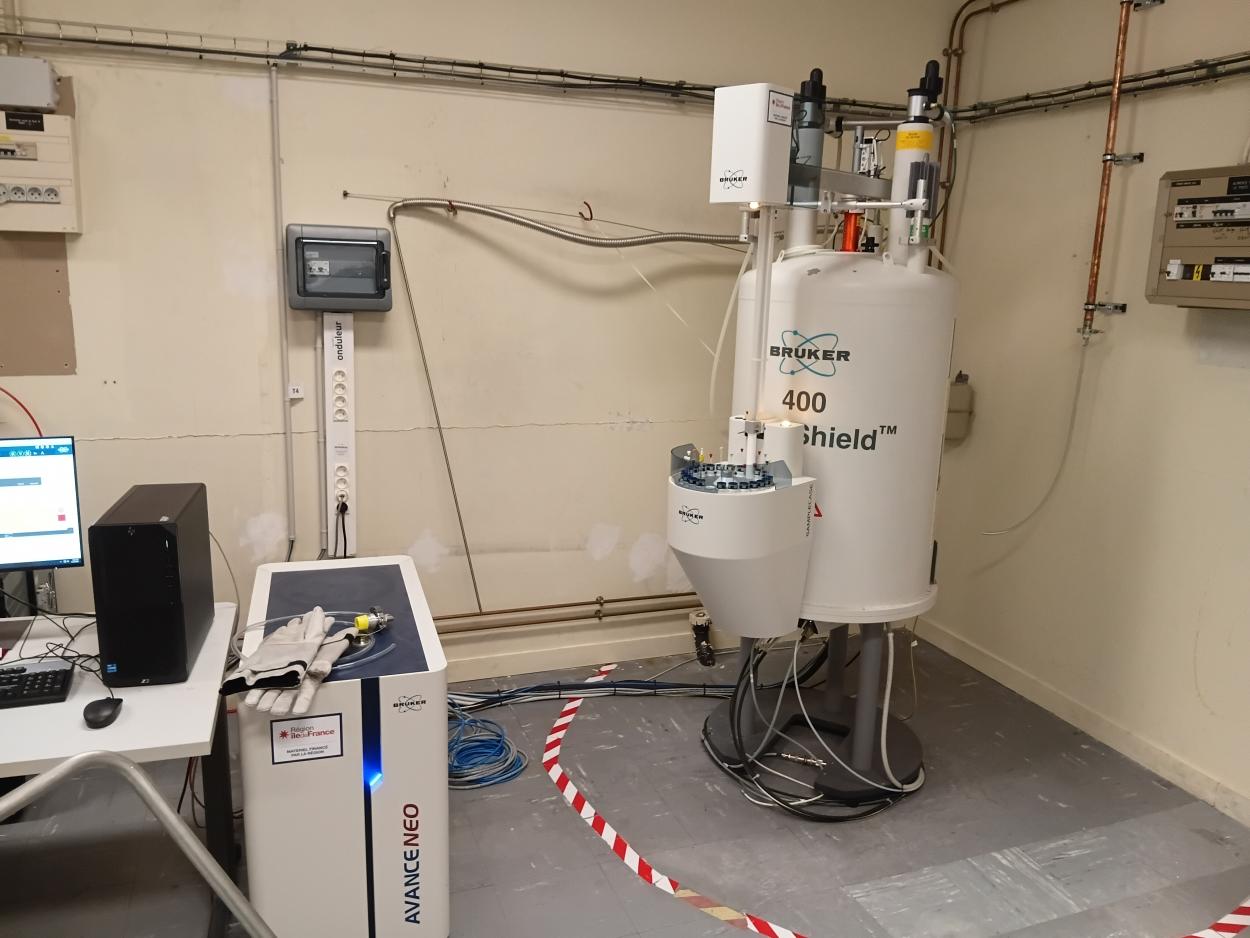
This spectrometer is part of the ResoMag facility which aims to pool the different devices from the Department of Chemistry and Chemical Engineering at IP-Paris.
The Bruker 400 MHz Asterix NMR spectrometer is equipped with a 9.4 T magnet, an AvanceNeo Nanobay console and an iProbe probe. It is equipped with a 24-sample changer that can be controlled by the ICON-NMR software: it is mainly intended for routine use. It is therefore reserved essentially for the study of the 1H, 13C, 19F and 31P nuclei with "classic" experiments (direct pulse decoupled or not, DEPT, COSY, HSQC, HMBC). Other spins and experiments are only possible after the agreement of a technical manager.
Usage of the sample changer is mandatory whatever the period.
During the week, from Monday to Friday, the use of the sample changer is separated into two periods which are likely to change depending in particular on the number of users. In this case, an information email will be sent to you by the platform managers.
Daytime period (Monday to Friday, 9:00 a.m. to 7:00 p.m.):
limitation to 15 minutes of experiment per tube;
on Thursday morning, from 9:00 a.m. to 1:00 p.m., Asterix can be booked for longer experiences. Reservations must be made at the latest the day before on simresa (https://simresa.polytechnique.fr). If no reservation is made on Wednesday at 2:00 p.m., Asterix goes into routine mode.
Night period (Monday to Friday, 9:00 a.m. to 7:00 p.m.):
limitation to 2 hours of experiment per tube, limited to 2 tubes per people. Please check in ICON-NMR that the duration of "Night Experiment" does not exceed 14h00.
programming and placing on the carousel from 5:00 p.m.
Weekend (Friday 7:00 p.m. to Monday 9:00 a.m.):
all experiments are authorized, in particular long characterizations (NOESY, weakly concentrated tubes, etc.), taking care not to exceed 62 hours of cumulative experiments.